
Introduction
A clamp, hanger, bent bolt, or bracket looks minor next to the truck, tractor, or machine it holds together. But when one fails or doesn't fit, the whole assembly pays for it.
A loose exhaust clamp can mean a roadside repair. An out-of-spec bent bolt can stop an assembly line.
"Small metal parts manufacturing" covers more than machining. It includes milling, turning, bending, forming, stamping, and the secondary operations that finish a part. The right method depends on geometry, material, volume, and requirements.
This guide covers process selection, material and design choices, quality control, finishing, and how to pick a qualified U.S. manufacturing partner.
Key Takeaways
- Small parts demand attention to workholding, burrs, handling, and repeatability.
- Machining suits precise features; bending, forming, and stamping often suit clamps, hangers, and bolts.
- Complete drawings and sensible tolerances prevent quoting delays and production problems.
- Quality systems, communication, and dependable shipping matter as much as the process itself.
What Small Metal Parts Manufacturing Involves
Small metal parts manufacturing turns stock, sheet, bar, rod, tube, or wire into functional components through cutting, machining, forming, joining, finishing, and inspection.
Machining versus forming
Machining is subtractive: excess material is removed as chips to reach the required shape. Forming and bending reshape material without removing it. Stamping converts flat sheet into specific shapes. The Bureau of Labor Statistics groups forging, stamping, bending, forming, and machining as metal-shaping processes, with welding and assembly joining separate parts.
Where these parts end up
Typical buyers include:
- Heavy-duty truck and trailer builders
- Agricultural and construction equipment manufacturers
- Exhaust system fabricators
- Fastener and MRO distributors
- Fleet service and repair operations
Exhaust clamps, hangers, and bent bolts are classic examples. They are simple in appearance, yet each needs consistent dimensions and a finish that survives heat, vibration, and weather.
Processes for Manufacturing Small Metal Parts
CNC milling and turning
Milling rotates a cutter against a clamped workpiece to create flats, pockets, slots, and holes. Turning rotates the workpiece against a cutting tool, producing shafts, pins, sleeves, and threaded parts.
Small parts raise specific problems:
- Workholding: Sandvik stresses stable clamping, limited overhang, and support against cutting forces.
- Slender parts: Sharp edges and lower cutting forces reduce deflection.
- Burrs: Turning burrs form where the tool exits; a chamfer or radius helps minimize them.
- Tool wear: Excessive flank wear contributes to milling burrs.
Forming, bending, stamping, and fabrication
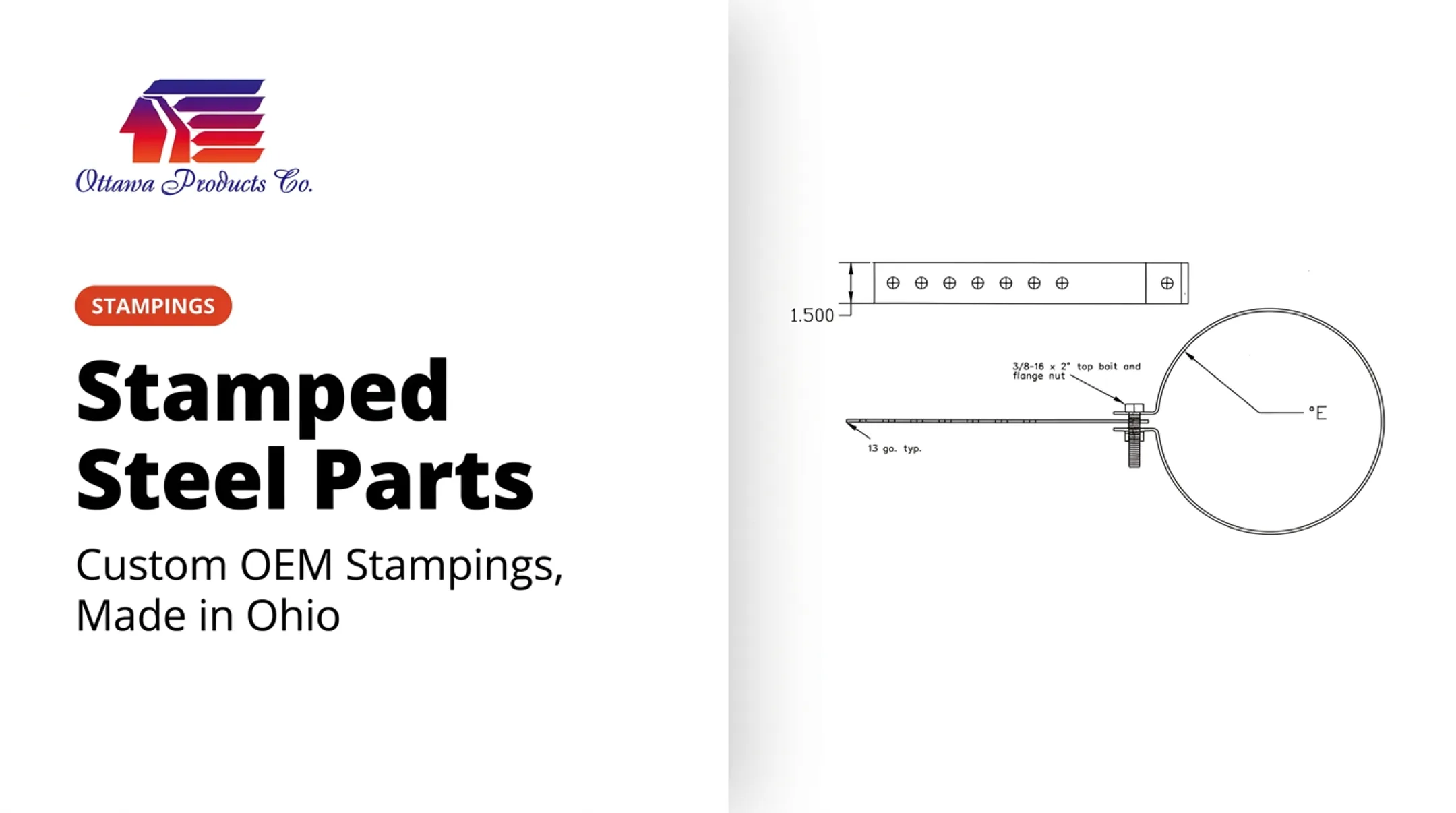
When a part has repeatable bends or a formed profile, forming usually beats machining. Clamps, brackets, hangers, and bent bolts fit that description.
Watch for these challenges:
- Springback: Bent material partly recovers toward its original shape. Higher-strength material springs back more, and a larger inside radius increases it, according to The Fabricator.
- Radius limits: Too small a radius can crack the outside of the bend.
- Short flanges: In V-die bending, the die opening constrains the minimum flange.
- Mix-ups and distortion: Small formed parts are easy to confuse and easy to damage in handling.
Specialized alternatives
When neither machining nor forming is the right fit, other processes can still produce small metal parts:
| Process | When to consider it |
|---|---|
| Casting | Production quantities where mold investment pays off |
| Forging | Parts like gear blanks and spindles; die costs spread over quantity |
| Extrusion | Constant profiles; tooling is relatively inexpensive |
| Metal injection molding | Complex shapes in large quantities |
| EDM | Small accurate parts, intricate details, hardened dies |
| Laser cutting | Intricate contours, small lots, prototypes |
| Metal additive manufacturing | Low-volume, complex geometry; machined finishing may still be needed |
No universal break-even quantity exists. Treat these as qualitative guides and ask suppliers for quotes at your actual volumes.
A practical selection sequence
- Review part geometry and functional features to shortlist processes that can produce them.
- Confirm material and tolerance requirements that limit which processes stay viable.
- Estimate annual and per-order volume so tooling cost can be weighed against piece price.
- Evaluate tooling and secondary operations such as deburring, plating, or heat treat.
- Compare total cost, lead time, inspection needs, and supply risk across the remaining options.

Materials and Design Considerations
Selecting steel and other metals
Grade identity matters more than generic labels. "Stainless" and "aluminum" are families, not single materials.
- Plain carbon steel: Primarily iron and carbon. Low-carbon fastener steels are ductile and suited to cold forming.
- Alloy steel: Specified alloying additions support high-strength applications and can be formed annealed, then heat treated.
- Stainless steel: Corrosion-resistant austenitic grades differ from stronger, less corrosion-resistant martensitic grades.
- Aluminum: Useful strength and formability, but alloy and temper decide suitability.
- Brass: A copper-zinc family used for fittings, gears, and bearings.
Select the grade from the engineering specification. Standards such as SAE J403 (carbon steel compositions) and ASTM A29 (hot-wrought carbon and alloy bars) define what you're buying.
Cost goes beyond price per pound. Grade, stock form, scrap, processing difficulty, coatings, heat treatment, and freight all affect the finished price.
Design for manufacturability
Specify tight tolerances only where function demands them. Tight tolerances can require secondary grinding or EDM, adding cost and lead time, per Protolabs.
Features that raise complexity:
- Thin walls that deflect or warp
- Square internal corners
- Deep features and undercuts
- Hard-to-reach surfaces
Favor clear datums, stable fixturing, practical bend radii, and geometry that works with standard tooling.
What an accurate quote needs
- CAD files or drawings
- Material grade and dimensions
- Tolerances and finish
- Heat-treatment or coating requirements
- Estimated quantity and packaging needs
- Inspection documentation and intended application
Quality Control, Finishing, and Production Challenges
Inspection throughout production
Good shops inspect at several points: incoming material, first piece or setup, in-process checks, and final inspection. Match the tool to the feature: micrometers, calipers, bore gauges, and CMMs (as listed by Mitutoyo) handle variable measurement, while GO/NO-GO gauges give pass/fail answers.

Handling and repeatability
Common risks include:
- Burrs and sharp edges
- Deformation and part-to-part variation
- Mixed lots
- Damage during tumbling, packaging, or shipping
Counting thousands of tiny parts accurately is its own challenge.
Consistency across repeat orders depends on:
- Documented work instructions and controlled setups
- Suitable containers and clear labeling
- Protective packaging
- Lot traceability
Surface finishing and protection
Finish choice depends on corrosion exposure, wear, appearance, friction, hardness, and environment. These treatments are not interchangeable:
- Zinc electroplating (ASTM B633): includes hydrogen-embrittlement precautions
- Hot-dip zinc (ASTM A153): for iron and steel hardware
- Stainless passivation (ASTM A967, A380): chemical treatment for stainless parts
Deburring, tumbling, and blasting prepare surfaces. Heat treatment then adjusts properties. Annealing reduces hardness and relieves stress; tempering follows hardening to reduce brittleness.
Quality management and supplier accountability
A quality management system supports controlled processes, corrective action, documentation, and continuous improvement. ISO now lists ISO 9001:2026 as the active edition, with the 2015 edition withdrawn.
Ottawa Products Co.'s quality system is certified to ISO 9001:2015 by NSF-ISR, covering manufacture of heavy-duty clamps and bent bolts. Certification covers the managed system, not every individual part, so dimensional inspection and material evidence still matter.
Before approving any supplier, confirm:
- Inspection records and material certifications
- Revision control
- Nonconformance handling and corrective action
- Packaging standards
- PPAP availability, if your program requires it
Choosing a Small Metal Parts Manufacturing Partner
Supplier checklist
NIST MEP advises examining quality documentation, production and inspection records, capabilities, capacity, and potential delays, not just quoted price. Ask about:
- Experience with your process and material
- Engineering support and quoting responsiveness
- Production capacity and delivery reliability
- Secondary operations and packaging
- Lot traceability
- Support for both OEM and replacement or MRO needs
Where Ottawa Products fits
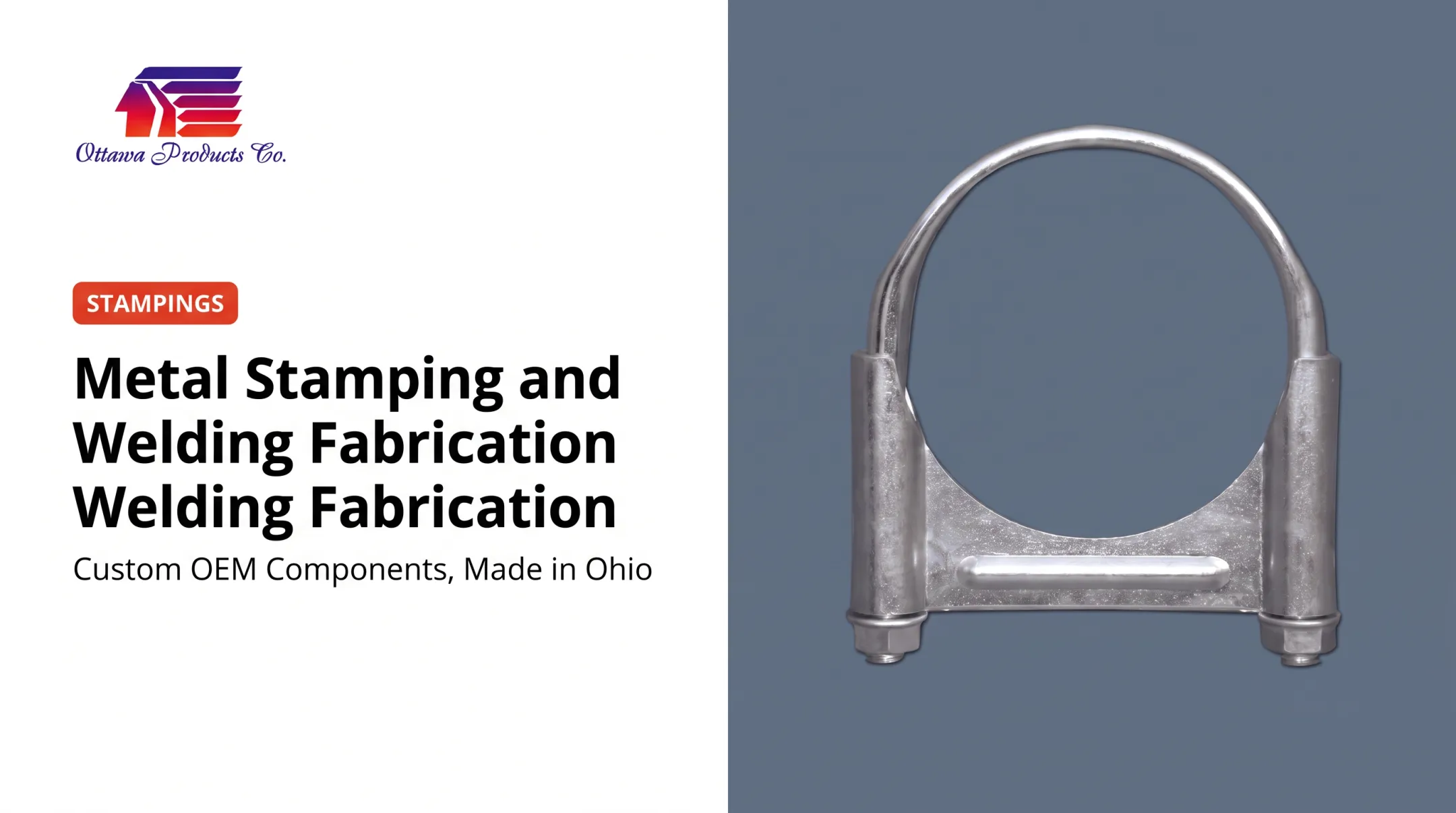
Ottawa Products Co. is a U.S.-based manufacturer in Curtice, Ohio, producing OEM exhaust clamps, hangers, mounting brackets, bent bolts, wire forms, and stampings. It serves heavy-duty truck, agricultural, off-road, high-performance automotive, and industrial applications.

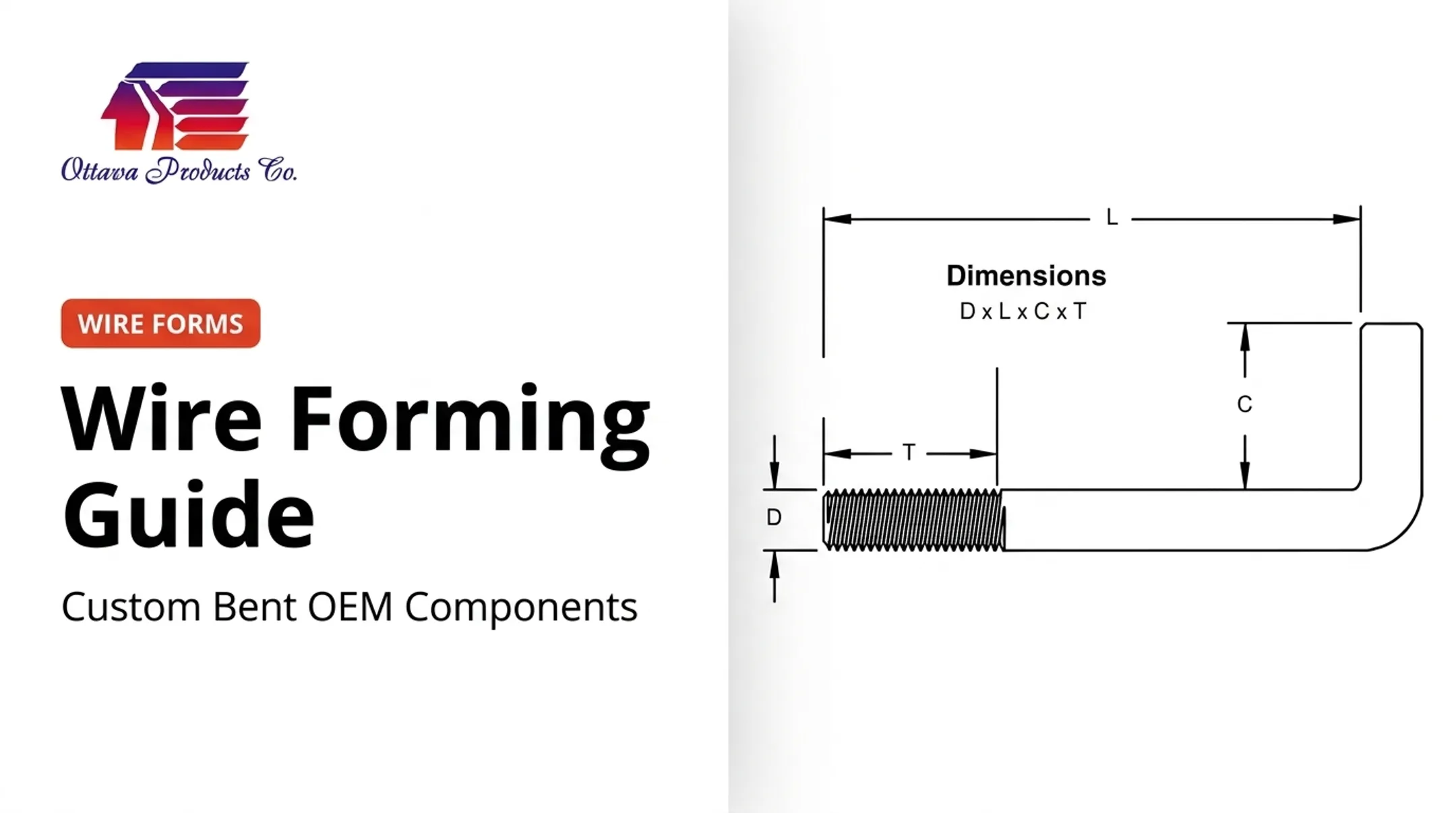
The custom bent-bolt and wire-form program covers:
- Bent bolts from 1/4" C1541 through 1/2" mild steel
- Wire forms from 1/8" through 5/8"
- No minimums, minimal tooling charges if required, and coatings per customer requirements
- Certifications supplied at no additional cost; PPAPs available
The company has separate contacts for quoting, engineering, quality, and shipping.
Requesting a quote
A custom-bolt RFQ should include:
- Bolt type, diameter or thread pitch
- Dimensions (L, C, A, T, B)
- Material, coating, and quantity
Adding drawings, tolerances, and application details speeds review. Quotes are typically emailed within 24 hours of an RFQ.
Contact quoting at quotes@ottawaproducts.com, engineering at engineering@ottawaproducts.com, or call 419.836.5115 for an application review or material and process discussion.
Frequently Asked Questions
What is the price of steel per pound?
It varies by grade, stock form, quantity, market conditions, freight, and processing. The BLS steel mill products index (WPU1017) read 388.580 for September 2026 (1982=100, preliminary). That figure is an index, not dollars per pound. Get a dated quote for your specification.
What is steel commonly used for?
Automotive parts, shafts, valves, fasteners, machinery, exhaust components, and fabricated parts. Carbon steel suits cold-formed fasteners, alloy steel suits high-strength needs, and stainless suits corrosive environments.
What is plain carbon steel?
Plain carbon steel is primarily iron with controlled carbon and limited other elements. Shops rely on it for availability, fabricability, cost, and weldability. Machinability varies with composition and hardness, and corrosion protection usually requires a coating.
What sizes does metal come in?
Sheet by thickness (gauge), plus plate, bar, tube, wire, and cut lengths. Gauge-to-thickness relationships differ by metal, so state actual thickness. Confirm available stock sizes with your manufacturer or distributor.
What is the difference between machining and metal fabrication?
Machining removes material to create precise features. Fabrication is broader, combining cutting, bending, forming, welding, and assembly. One finished part can use several methods.
How do I choose a small metal parts manufacturer?
Evaluate process fit, material knowledge, quality systems, and engineering communication. Confirm inspection documentation, capacity, packaging, delivery, and experience with your application.