
Why Exhaust System Metal Materials Matter
Exhaust metal affects corrosion resistance, heat tolerance, weight, formability, appearance, service life, and total ownership cost. No single metal wins on all of them.
A muffler that survives a Florida coast may be overkill for a dry-climate farm tractor. A titanium race header would be a poor fit for a fleet truck that sees road salt and daily vibration.
This guide covers mild steel, aluminized steel, stainless grades, titanium, and Inconel. It then shows how vehicle use, environment, and component type should drive the final choice.
Key Takeaways
- Mild and aluminized steel win on cost and workability; stainless and specialty alloys on corrosion, heat, weight, or looks.
- "Rustproof" isn't absolute. Even stainless can pit, discolor, or crack.
- Sound depends mostly on design, not metal grade.
- Before ordering, specify application, environment, grade, coating, thickness, and joining method.
What Metals Are Used in Exhaust Systems?
An exhaust system is not one material. Manifolds, tubing, catalytic converters, mufflers, tips, clamps, hangers, and brackets often use different metals.
Common material choices by component include:
- Manifolds: SiMo ductile cast iron is widely used.
- Muffler and converter components: Cleveland-Cliffs lists aluminized 409/439 for both.
- Tips: one popular aftermarket tip is polished T-304 stainless, though that is a product example, not a standard.
- Clamps and hangers: aluminized steel and stainless versions both exist.
Mild and Aluminized Steel
Mild carbon steel is affordable, widely available, strong enough for most uses, and easy to form and weld. Its weakness is iron content. DieselNet notes poor resistance to road salt and exhaust condensate.
Aluminized steel is carbon steel with a hot-dip aluminum-silicon coating, about 91% aluminum and 9% silicon for Type 1 (ASTM A463). The coating improves exterior corrosion resistance. The manufacturer states effectiveness up to 1,250°F.
The coating has limits:
- Cut edges, punched holes, and deep scratches can show rust staining.
- Tight bends can crack or craze the coating.
- Welding can remove local protection.
Both materials weld with standard processes, though aluminized steel needs procedures adapted to the coating. Price ratios between mild and aluminized steel vary by part and volume, so get quotes for your specific application.
Stainless Steel Grades
Published ASTM A240 limits from ATI show how the common grades differ:
| Grade | Structure | Chromium | Nickel | Molybdenum |
|---|---|---|---|---|
| 409 | Ferritic | 10.5-11.7% | 0.50% max | Not listed |
| 439 | Ferritic | 17-19% | 0.50% max | Not listed |
| 304 | Austenitic | 17.5-19.5% | 8-10.5% | Not listed |
| 316 | Austenitic | 16-18% | 10-14% | 2-3% |

409 is closely associated with OEM-style exhaust work; ATI reports extensive automotive exhaust use. Higher-alloy grades make sense when appearance, severe corrosion exposure, or longer life matters more. No grade is universally superior. Molybdenum in 316 helps localized corrosion resistance, but it isn't immunity.
Specialty Metals and Cast Alloys
Titanium and nickel alloys serve niche jobs. TIMETAL Exhaust XT has a density of 4.51 g/cm³, versus 8.44 g/cm³ for Inconel 625, which is rated from cryogenic to 1,800°F.
Honda's F1 development saved 1,400 g (20%) per exhaust assembly by replacing Inconel 625 with titanium. That was a racing result, not a fleet guarantee. Material and fabrication costs for both are high.
Manifolds and other hot parts may use cast iron or cast stainless. Treat those separately from tubing.
How Exhaust Metal Materials Compare
Corrosion
Corrosion hits from several directions:
- Exterior: road salt, coastal air, moisture, and off-road debris
- Interior: condensation from short trips
- Stress points: weld areas, surface damage, and thermal cycling
In Cleveland-Cliffs' lab salt-and-heat cycle, coated and uncoated 409/439 samples treated at 800°F showed at least double the pitting rates of those treated at 600°F. That is a lab cycle, not service years. No credible universal life comparison between aluminized and stainless mufflers exists.
Heat and Thermal Cycling
Heat concentrates near manifolds, turbochargers, and catalytic converters. Ratings vary by product:
- Type 1 aluminized carbon steel: 1,250°F heat resistance
- Aluminized 409: oxidation resistance to 1,550°F; aluminized 439: 1,700°F
- Bare 439: ATI projects 1,525-1,700°F, depending on cycling severity
For context, a BorgWarner gasoline turbo can handle gas up to 980°C (1,796°F). That figure is a capability rating, not a typical operating range.
Expansion matters too. 409 HP expands at 10.52 x 10⁻⁶/K; 304 at 16.6 x 10⁻⁶/K.

Strength, Forming, and Welding
Mild and aluminized steel are forgiving to bend and repair. Ferritic stainless is workable, though some welded heats are prone to intergranular corrosion.
Austenitic 304 can sensitize at 800-1,500°F; low-carbon 304L delays that. Final material choice also depends on the fabricator's equipment, process control, and experience.
Weight, Finish, and Cost
Lighter or shinier isn't automatically better for heavy-duty work. Ottawa Products' TorcTite clamp data shows the scale:
- 2.00 inches: aluminized about 0.89, stainless about 0.80
- 6.00 inches: aluminized 1.18, stainless 0.99
Judge materials on lifecycle value rather than sticker price. Factor in replacement frequency, labor, downtime, coating damage, and availability.
Common Misconceptions
The magnet test. Ferritic 409 is strongly magnetic, while annealed 304 and 316 usually aren't. But cold work can make 304 magnetic, so a magnet cannot confirm grade.
Terminology matters:
- Corrosion resistance relies on a passive surface layer, not immunity.
- Oxidation is "dry" high-temperature attack, distinct from wet corrosion.
- Pitting is localized breakdown that can go through the wall.
- Crevice corrosion starts in tight joints where moisture and chlorides collect.
- Heat tint on bare 409 can precede salt pitting.
How to Choose the Right Exhaust Metal for an Application
Operating Environment
Match the metal to what it sees:
- Light exposure, dry climate: aluminized steel is often practical.
- Heavy road salt or coastal air: consider 409 or higher-alloy stainless. SSINA identifies deicing and coastal chlorides as sources of localized stainless corrosion.
- Off-road impact: coating damage is the concern, so favor materials that tolerate scratches.
Short-trip operation traps condensate, so a system can corrode from the inside. A clean exterior doesn't predict service life.
Performance and Temperature
Identify whether the part sits in a moderate section or near a manifold, turbo, or converter. Get application-specific temperature limits from your engine or system designer.
Titanium and nickel alloys can justify their cost in racing. Most commercial, fleet, agricultural, and industrial work should prioritize durability, availability, and maintainability.
Budget and Lifecycle Value
Weigh these against initial cost:
- Expected service life in your environment
- Corrosion exposure
- Repair access
- Downtime cost
- Replacement labor
- Consequence of failure
Aluminized steel or 409 may be the practical choice when exposure is moderate and parts are easy to replace. Higher alloys earn their premium when access is difficult or downtime is expensive.
Design, Sound, and Appearance
Metal grade alone doesn't set exhaust tone. An SAE study of a 16-ton truck muffler found different shell configurations changed pass-by noise by roughly 0.6 dBA. Resonator design, engine firing frequency, tailpipe length, and layout all contribute.

Polished finishes and visible tips matter in some automotive builds. In commercial systems, corrosion, strength, vibration resistance, and serviceability come first.
Purchasing Checklist
Confirm before ordering:
- Application and operating temperature
- Material grade, thickness, and coating or finish
- Corrosion exposure
- Joining method and tolerances
- Mounting loads and inspection requirements
- Compatibility with adjacent components
Also request material certifications, documented specifications, and quality requirements. These documents aren't interchangeable. A mill certificate (EN 10204 3.1) reports specific inspection results, while PPAP addresses production approval.
Exhaust Hardware, Manufacturing, and Sourcing Considerations
Clamps, hangers, brackets, and bent bolts need different properties than the tubing they hold. Strength, flexibility, vibration resistance, and formability all matter.
Dissimilar metals add risk. The American Galvanizers Association says galvanic corrosion needs dissimilar metals, electrical contact, and an electrolyte. A small galvanized part coupled to a large cathodic area is unfavorable.
Process details also shape performance. Ask suppliers about:
- Bending radius and coating integrity
- Welding procedures
- Finish or coating specification
- Heat exposure limits
- Dimensional control and inspection methods
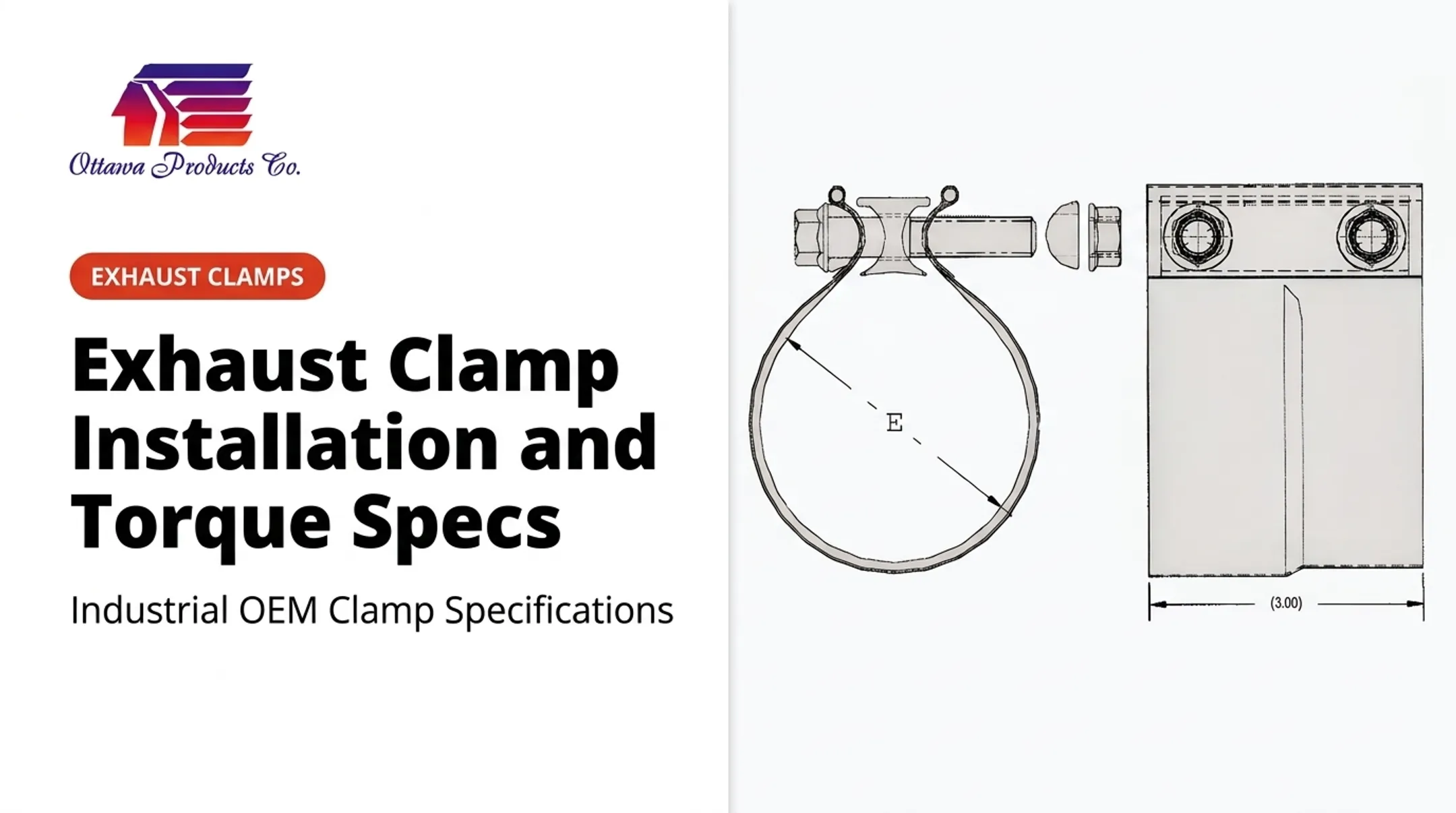
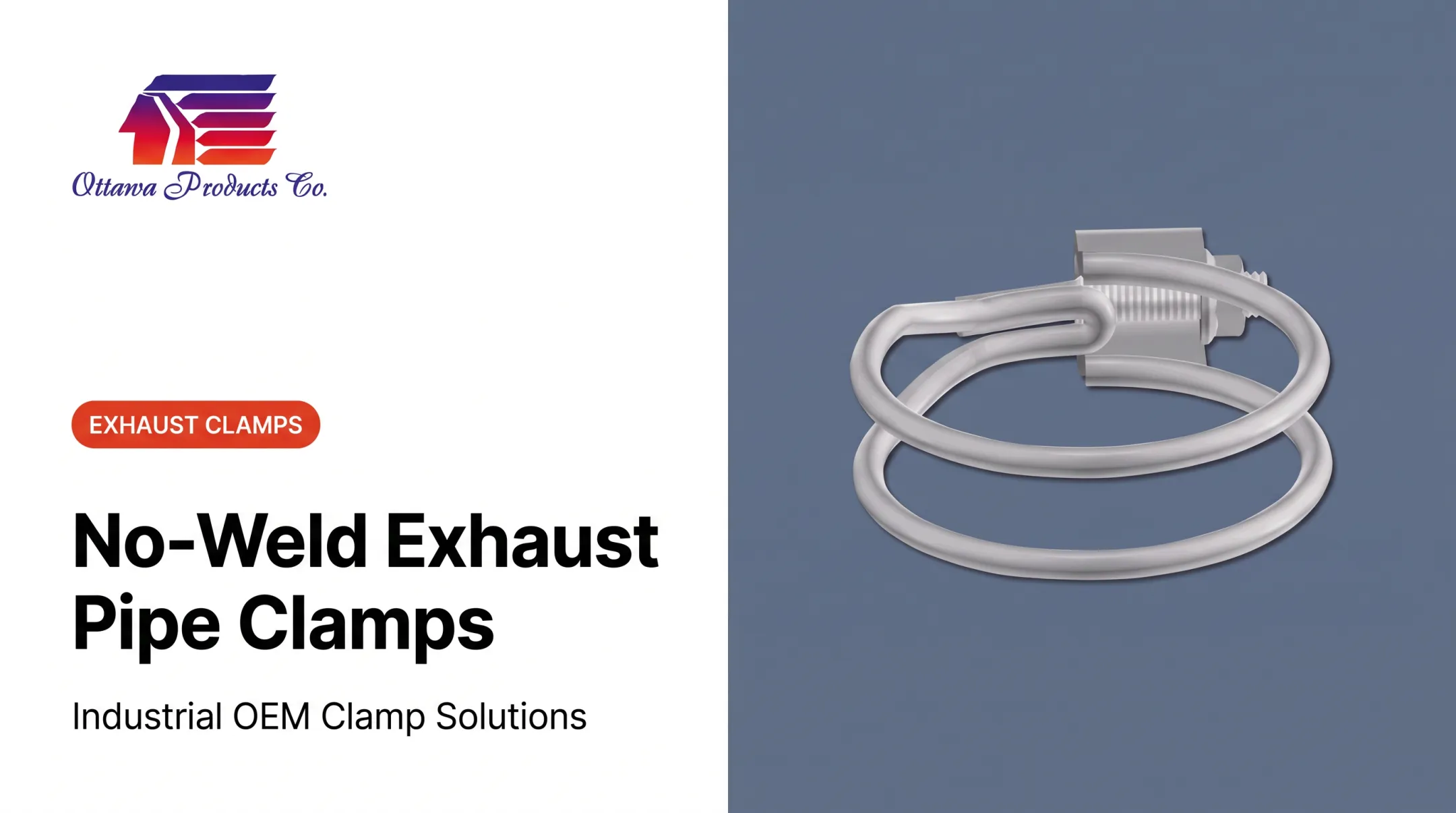
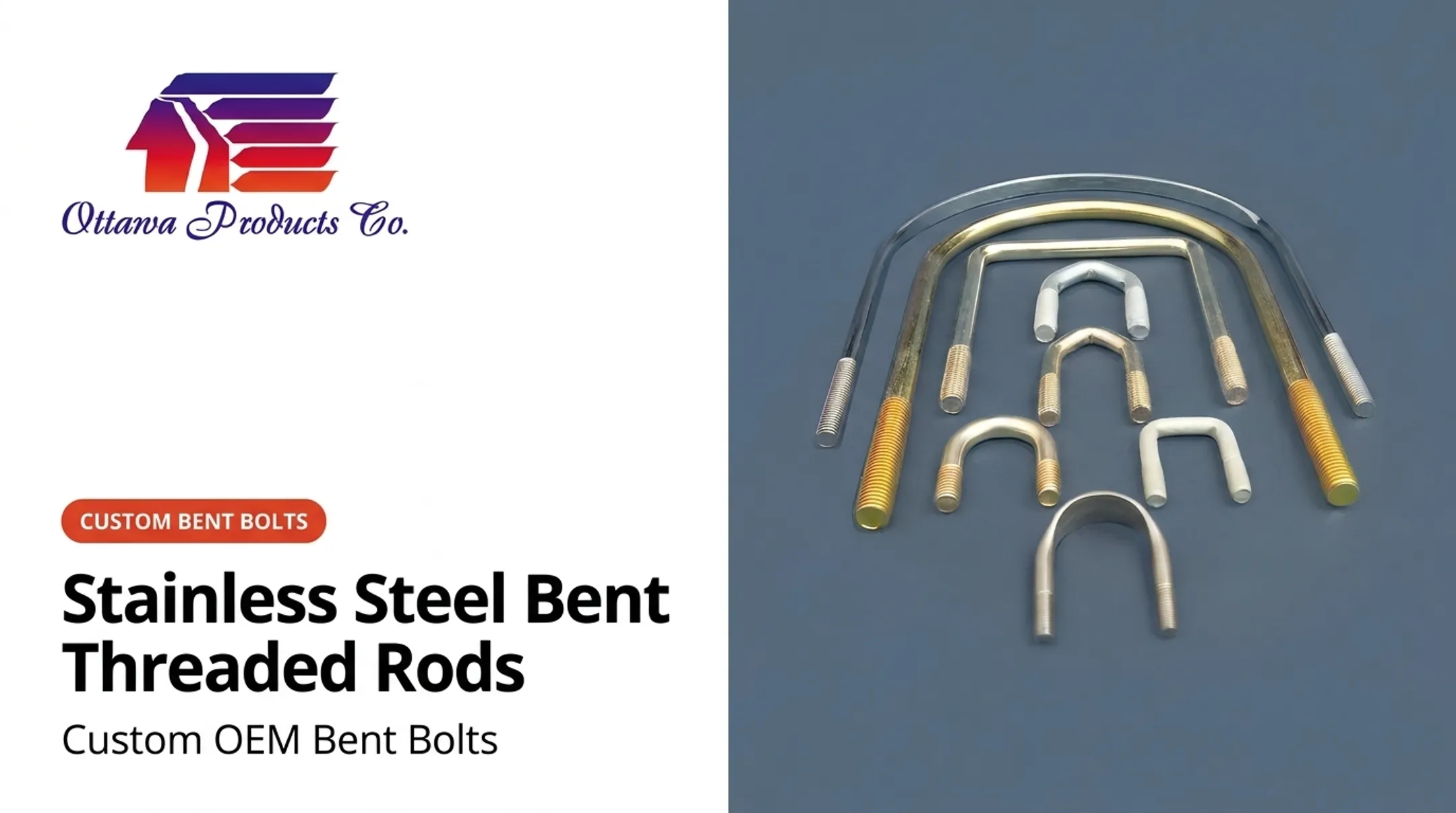
Those answers matter as much as alloy choice when you source hardware. Ottawa Products Co. is a U.S. manufacturer of OEM exhaust clamps, hangers, bent bolts, and related components, made in Curtice, Ohio. It serves heavy-duty truck, agricultural, automotive, off-road, and industrial markets.
Its quality system is ISO 9001:2015 certified. Certifications and PPAPs are available, and coatings can be supplied to customer specifications.
Catalog examples show the material range: AccuSeal clamps come in aluminized steel or 430 bright stainless, while the TC-Series coupler is 409 bright stainless only. The custom bent bolt quote form asks for bolt type, thread pitch, dimensions, material, coating, and quantity. Confirm available materials and specifications for your application with the factory.
Frequently Asked Questions
What exhaust metal doesn't rust?
None is fully immune. Stainless grades resist corrosion better than untreated mild steel, but they can still show surface rust, pitting, or internal corrosion.
What metal is best sounding for exhaust?
Sound depends more on layout, pipe dimensions, muffler, resonator, and engine configuration than on grade. Material can still influence resonance and construction choices.
What metal is used for exhaust?
Common choices are mild steel, aluminized steel, 409, 439, and 304 stainless, plus specialty alloys. The right one depends on the component and operating conditions.
Is stainless steel always better than aluminized steel for an exhaust system?
No. Stainless usually resists corrosion longer but costs more. Aluminized steel remains practical where exposure is moderate, budgets are tight, and parts are easy to replace.
How do I choose exhaust metal for a heavy-duty or off-road application?
Evaluate vibration, impact, moisture, salt, chemicals, temperature, mounting loads, downtime, and serviceability. Ask suppliers for documentation before choosing a grade or coating.