
Double nutting has two main jobs: locking a fastener against loosening, and leveling or positioning a base plate. Each uses a different nut arrangement, and mixing them up causes problems.
This guide covers anchor bolt types, nut and washer selection, thread engagement, the "3 thread rule," tightening sequence, and when to call an engineer.
Key Takeaways
- Two nuts can resist rotation or position a plate, but they don't double connection strength.
- Nut order, sequence, projection, and material compatibility all affect performance.
- Follow the drawings, manufacturer instructions, and engineer approval where required.
- Don't add a second nut to a post-installed anchor without manufacturer approval.
How Double-Nut Systems Work
What is a double-nut anchor bolt assembly?
It's two nuts on the threaded portion of an anchor bolt, rod, or stud. The pair is either two full-height nuts or one full-height nut with a thinner jam nut.
A typical assembly includes:
- A primary nut that carries the load
- A second nut that locks or supports
- Washers under the nuts
- A base plate or equipment frame
- A foundation or structure below
Double-nut locking versus double-nut leveling
In a locking arrangement, the two nuts sit adjacent and jam against each other.
In a leveling arrangement, the nuts sit on opposite sides of the base plate. The lower nut supports and adjusts the plate; the upper nut clamps it. The Texas DOT Item 449 specification describes these nuts as sandwiching the base plate.
Leveling assemblies need more thread projection, room for washers, an adjustment range, and usually grout afterward. OSHA 1926.755 also requires at least four anchor rods per column, so leveling nuts carry real erection loads.

Why double nutting can resist self-loosening
Properly jammed nuts load opposite thread flanks, which limits relative rotation. Simply spinning one nut onto another without that jamming effect gives little benefit.
The evidence is mixed. In a Bolt Science demonstration using M10 bolts, the thin nut against the joint resisted loosening, while the thin-nut-on-top arrangement performed little better than a single nut.
NASA's Fastener Design Manual calls jam-nut assemblies unpredictable because of unequal tightening and uncertain load sharing. Treat locking as conditional, not guaranteed.
Nut order and jam-nut placement
Common engineering guidance puts the thin jam nut against the joint and the full-height nut outside it. That is a published recommendation, not a universal rule for every anchor bolt. Exceptions include:
- Long bolt extension
- High tensile loads
- Thread stripping risk
- Structural double-nut designs
- Project-specific requirements
Torque, preload, and thread engagement
Torque is an indirect measure of bolt tension. Lubrication, coating, thread condition, and friction all change how much tension a given torque produces. Over-tightening the second nut can damage threads, deform the bolt, or make removal difficult.
No universal torque value exists. Use the manufacturer's or engineer's tightening procedure.
Types of Anchor Bolts Used With Double-Nut Assemblies
Cast-in-place anchor rods and bolts
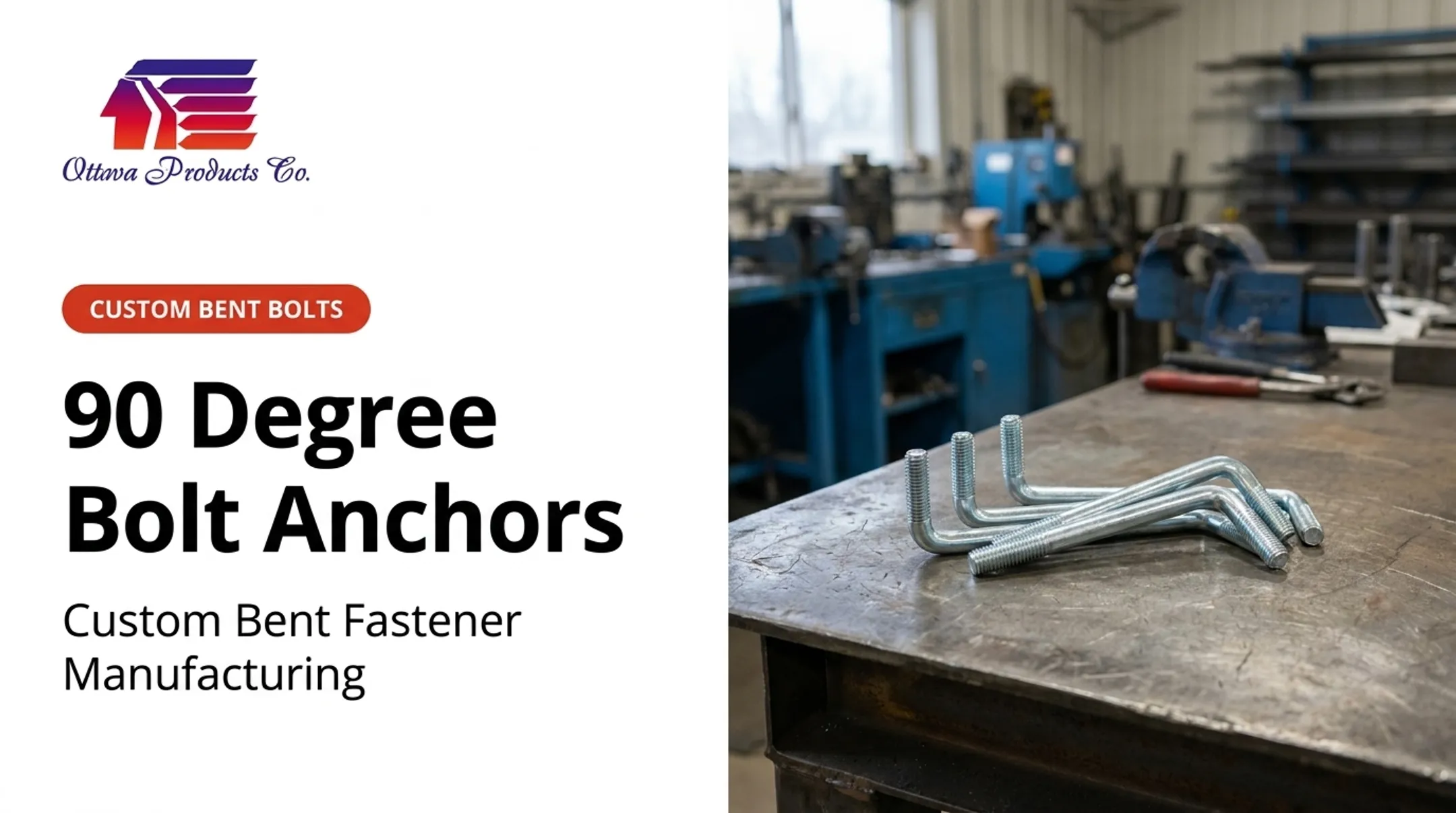
These are headed, hooked, bent, or straight threaded bolts cast into concrete. The exposed threaded projection is what makes a double-nut assembly possible.
ASTM F1554 covers straight, bent, headed, and headless anchor bolts. Its grades 36, 55, and 105 refer to minimum yield strength in ksi.
Other specifications appear in practice, including A307, A449, and A354, but no single grade suits every job. Keep the finished-fastener specification separate from the base steel specification, since A36 steel alone doesn't define a fastener.
Post-installed anchors
These include wedge, sleeve, adhesive, and undercut anchors. Each has a defined installation method and approved hardware. ICC-ES report ESR-4266 for a torque-controlled wedge anchor, for example, specifies its own nut and washer arrangement.
Don't add a second nut, change washers, or alter embedment without manufacturer approval.
Studs, threaded rods, and double-ended bolts
Use the correct term when you specify or order:
- Continuous-thread stud or threaded rod: threaded along its full length
- Double-end stud: headless, threaded at both ends
- Stud bolt: ASME's flange-bolting term, not a synonym for every anchor rod
- Anchor rod: a threaded member anchoring supports to concrete
These show up in equipment mounting, structural frames, base plates, exhaust systems, agricultural equipment, and industrial assemblies. Ottawa Products Co. lists both straight double-end and single-end threaded stud bolts among its formed components.
Choosing Double-Nut Anchor Bolts and Fasteners
Start with the application and load conditions
Evaluate:
- Tension, shear, and uplift
- Vibration, shock, and fatigue
- Thermal cycling and corrosion exposure
- Accessibility
- Structural or equipment-related connection type
Seismic, fatigue-sensitive, pressure-related, lifting, and life-safety applications need project-specific design review. Bolt diameter alone isn't enough.
Match the anchor bolt, nuts, and washers
Nut strength class, material, thread series, and finish must suit the rod. Under F1554, nut proof-load stress must meet or exceed the anchor's specified minimum tensile stress. According to Portland Bolt's compatibility table, Grade 105 rods typically pair with Grade D or DH heavy hex nuts, while Grade 36 uses Grade A.

Other points:
- F1554 specifies F436 Type 1 hardened washers unless otherwise stated
- Galvanized nuts are overtapped, so don't pair them with plain bolts
- A thin jam nut doesn't carry the proof load of a full-height nut
- Don't substitute generic hardware for a specified structural assembly
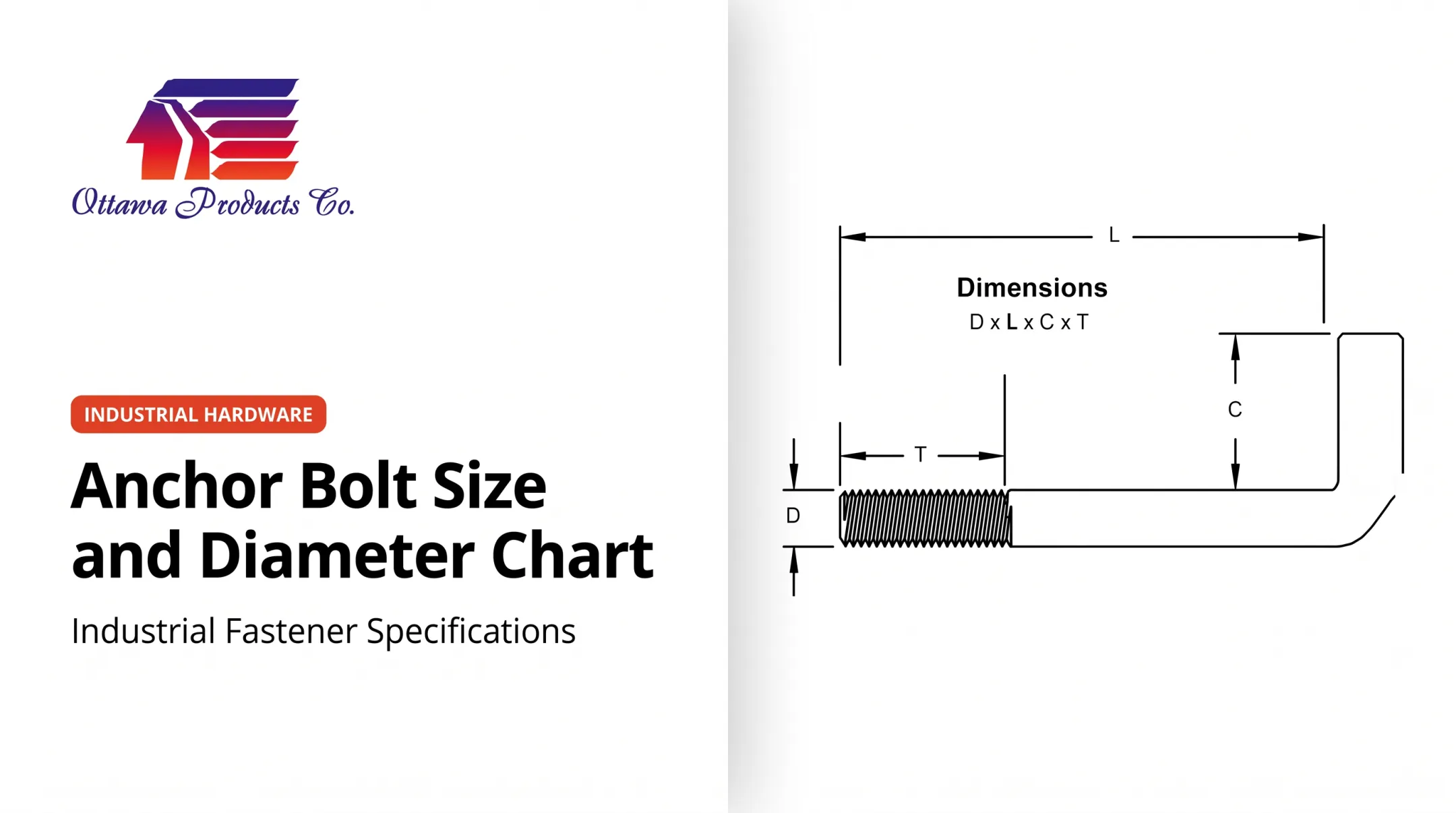
Confirm diameter, thread, length, and projection
Check these before ordering:
- Nominal diameter and thread series (F1554 defaults to UNC, Class 2A)
- Thread length and overall length
- Bend or head geometry
- Base plate and washer thickness
- Nut stack height
- Available adjustment
Thread engagement inside the nut and projection beyond the nut are separate measurements. Engagement affects load transfer; projection is mostly an inspection and access check.
The "3 thread rule"
The field rule asks for several full threads to show beyond the nut after tightening. But published guidance doesn't support it as a universal requirement.
The AISC bolting FAQ accepts a bolt end flush with the nut face for structural bolting. Portland Bolt's anchor guidance says ideally two full threads project.
So treat it as a convention. A project may set its own criterion, and if so, the project specification governs.
Specify documentation and custom component requirements
When buying production quantities, request:
- Drawings and dimensional information
- Material certifications
- Coating or finish details
- Inspection requirements
- Lot traceability
If a standard anchor bolt won't fit an OEM or industrial assembly, Ottawa Products Co. is a US-based, ISO 9001:2015-certified manufacturer of bent bolts and formed components. Quoting and engineering teams support heavy-duty, agricultural, automotive, and industrial applications.
Listed bent-bolt thread sizes run from 1/4 inch through 1/2 inch. Send a drawing and application details for review.
Installation, Tightening, and Inspection
Review the design before assembly
Confirm the approved layout, embedment, projection, plate thickness, hardware specifications, tightening method, grout requirements, and inspection records.
Get qualified engineering review before swapping a full nut for a jam nut, adding a second nut to a specified connection, or modifying structural or seismic anchorage. OSHA also bars field modification of anchor rods without the structural engineer of record's approval.
Prepare the hardware and connection surfaces
Before installing nuts:
- Inspect threads for damage, burrs, corrosion, contamination, and coating buildup
- Check washer seating and hole alignment
- Confirm base plate condition and nut orientation
- Use only approved lubricants where torque-controlled tightening is specified
Install a locking double-nut assembly
- Seat the first nut (the jam nut, where specified) against the joint to the specified tightness.
- Hold it with a wrench so it can't turn.
- Tighten the second nut against it.
- Avoid excessive torque between the nuts.
With two full-height nuts, the sequence follows the specification for that assembly. General locking practice isn't the same as a structural double-nut design.
Install a double-nut leveling assembly
Lower nuts set elevation and plumb. Upper nuts and washers clamp the plate once it's positioned.
Grout then transfers compression beneath the plate. AISC guidance says leveling nuts support the frame until grouting, but whether to leave or remove them afterward isn't universal. Don't back them off unless the engineer of record directs it.
Ordinary anchors are typically installed snug-tight. Pretensioned applications require engineered instructions. TxDOT's Item 449, for example, specifies 1/6 turn past snug-tight for its designated assembly, not for all anchors.

Verify the finished connection
Check:
- Nut seating and washer placement
- Remaining thread projection
- Plate elevation, plumb, and alignment
- Torque or tension records
- Signs of thread damage or galling
Document approved substitutions, field adjustments, inspection results, and as-built changes, especially for structural or regulated applications.
Common Mistakes and Safety Considerations
Treating two nuts as an automatic strength upgrade
Two nuts affect locking, positioning, and load distribution. They don't fix an undersized bolt, shallow embedment, weak concrete, or wrong preload.
FHWA states that pretension between nuts in a double-nut moment connection doesn't change connection strength, though it can help fatigue behavior.
Reversing the nut sequence or over-tightening
Common causes of stripped threads and lost preload:
- Wrong jam-nut placement
- Tightening the second nut without restraining the first
- Using two thin nuts where a full-height nut is required
- Over-tightening
Ignoring projection, corrosion, and removal conditions
Conditions that make installation harder and maintenance worse include:
- Short projection
- Damaged galvanized threads
- Mismatched materials
- Contamination
Galling, a cold-welding of threads under pressure, is common in stainless steel and doesn't prove preload was reached. Left unaddressed, these issues show up in service as loose nuts. An Alaska DOT study recorded loose nuts in 54 of 177 inspections of 104 high-mast poles.
Safety note: Structural and foundation anchor connections should be installed and approved by qualified personnel following the governing drawings, standards, manufacturer instructions, and site procedures.
Frequently Asked Questions
What does double nutting a bolt do?
Two properly installed nuts can resist nut rotation, maintain clamping, or position a base plate. The method doesn't automatically increase bolt strength.
What are the different types of anchor bolts?
Cast-in-place types include headed and bent bolts and straight anchor rods. Threaded rods and studs are also used. Post-installed types include expansion, adhesive, and undercut anchors.
What is the 3 thread rule?
It's a field convention for thread projection beyond the nut. Required engagement and the project specification take precedence.
What is a double-ended bolt called?
Usually a double-end stud, stud bolt, threaded rod, or anchor rod, depending on geometry and application. Double-end studs are threaded at both ends.
Can double nuts be used to level a base plate?
Yes. Lower nuts set elevation, an upper nut clamps the plate, and grout follows alignment. Plan for enough thread projection.
How should double nuts be tightened on an anchor bolt?
Follow the specified sequence, nut order, and torque or tension procedure. Where none exists, get engineering instructions for the application.