
The distinction matters because the choice affects installation timing, load transfer, corrosion life, and rework. A misplaced cast-in anchor can mean demolition or foundation repair once the concrete cures.
This guide separates the terms, compares the configurations, and explains what to check before you specify one. Final selection belongs to the project engineer.
Key Takeaways
- A J-bolt is a cast-in anchor with a hooked embedded end and a threaded projecting end.
- "Anchor bolt" also covers L-bolts, headed bolts, plate-ended rods, and post-installed anchors.
- J-bolts go in before the pour; some other anchors install in cured concrete.
- Choose by load, embedment, edge distance, environment, and specification, not shape or price.
J-Bolts vs Anchor Bolts: Quick Comparison
| Factor | J-bolt | Other anchor bolts |
|---|---|---|
| Timing | Placed before the pour | Cast-in before the pour, or post-installed after curing |
| Load transfer | Hook bearing | Head or nut bearing, mechanical engagement, or adhesive bond |
| Cost drivers | Templates, placement labor, misalignment risk | Drilling, hole cleaning, cure time, inspection, possible redesign |
| Adjustability | Hard to move once concrete hardens | Post-installed options can address missed locations |
Cost
Total cost is more than the price of the bolt.
For J-bolts, count:
- Material or coating
- Templates and placement labor
- Misalignment risk during the pour
Post-installed systems add drilling, hole cleaning, installation equipment, inspection, and cure constraints. No credible price comparison applies across projects, so get quotes against your actual drawings.
Composition and configuration
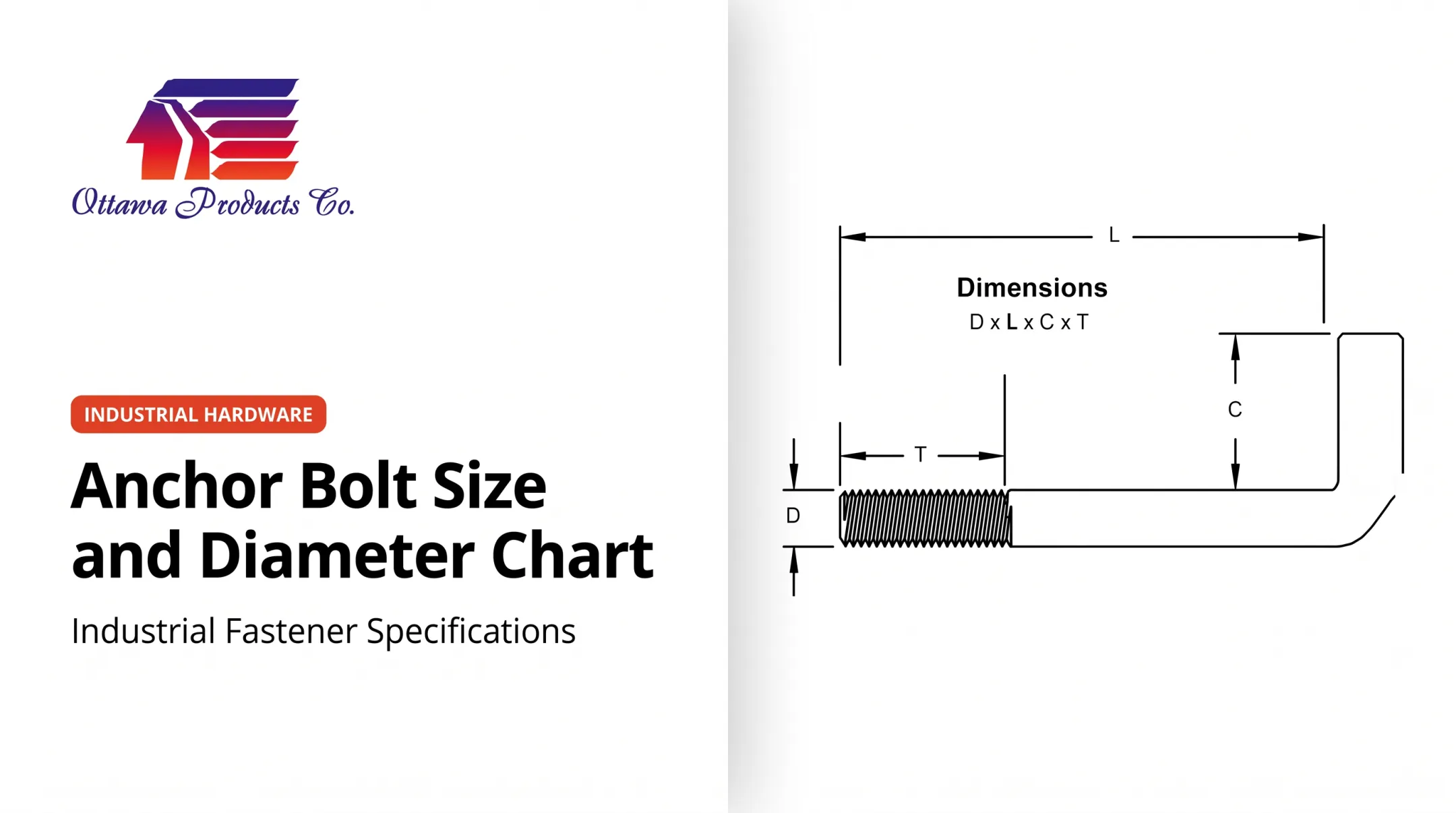
A J-bolt has a threaded steel shank and a curved embedded hook. The shape alone does not establish grade, capacity, or suitability. ASTM F1554 grades 36, 55, and 105 carry minimum yield strengths of 36, 55, and 105 ksi, so the grade matters as much as the bend.
The wider anchor category includes hooked, L-shaped, headed, straight, plate-ended, mechanical, and adhesive systems.
Durability and corrosion resistance
Service life depends on steel grade, finish, concrete cover, moisture, and chemical exposure. F1554 anchors specify hot-dip galvanizing to ASTM F2329, and other coatings can be agreed between purchaser and supplier.
Post-installed systems add compatibility questions. One adhesive evaluation report limits zinc-plated rods to dry interiors, while hot-dip galvanized and stainless rods are permitted outdoors. Those limits are system-specific, so read the report for the product you use.
Installation and adjustability
A J-bolt is secured in position before concrete placement. Correcting it afterward is difficult. Post-installed anchors fix that timing problem but bring their own installation procedures and design checks.
Load behavior
A hook develops anchorage through bearing. Performance still depends on embedment, concrete breakout, pullout, pryout, steel strength, spacing, and edge distance. No configuration is universally stronger.

What Is a J-Bolt?
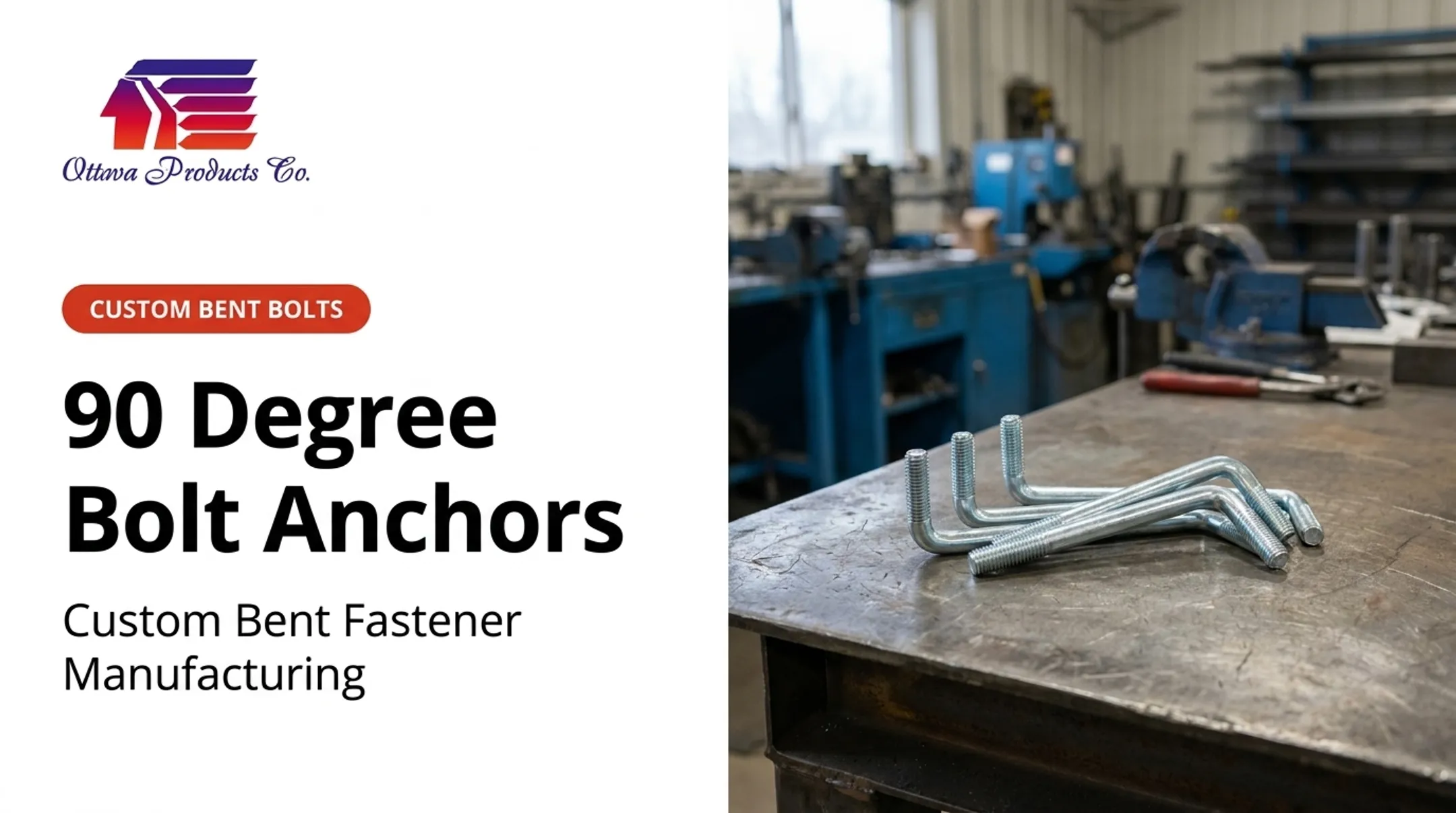
A J-bolt is a steel bolt with a threaded straight end and a curved embedded end shaped like a "J." ACI 318-19 describes it as bearing principally through an embedded 180-degree bend, with a minimum hook extension of 3 bolt diameters. An L-bolt uses a 90-degree bend.
The hook anchors in the concrete. The threaded projection lets you secure a base plate, bracket, sill, or pole with a washer and nut.
Because the hook is cast in place, early coordination can reduce drilling and retrofit work. Inaccurate positioning or too little projection shows up only after the concrete cures.
Common variations
- Diameter and overall length
- Hook dimensions, including J diameter and gap
- Thread length
- Steel grade
- Plain, galvanized, or stainless finish
Custom J-bolts are commonly offered from 1/2 to 1 1/2 in. diameter. That is a typical manufacturer range, not a standard. The engineer or project specification must set the configuration. Ottawa Products Co. manufactures custom bent bolts to those project specs.
Use cases of J-bolts
J-bolts are selected during design and held by a template before placement. Typical applications include light poles, signs, base plates, structural supports, and equipment foundations where a hooked cast-in anchor is specified.
One caution: AISC's published FAQ discourages hooked rods where column bases need uplift or moment resistance. It cites bearing-only pullout and crushing inside the hook that reduces stiffness. Hooks are not automatically the stronger choice.
What Is an Anchor Bolt?
"Anchor bolt" is the broad category. ASTM F1554 covers straight, bent, headed, and headless anchor bolts, including all-thread rod, used to anchor structures to concrete foundations. A J-bolt is one subtype.
Common configurations:
- J-shaped and L-shaped bolts
- Headed bolts
- Straight rods with bearing plates or nuts
- Post-installed mechanical anchors (expansion, screw, undercut)
- Post-installed adhesive anchors
Cast-in vs post-installed
Cast-in anchors are coordinated before the pour. Post-installed anchors are drilled and set after curing, following product-specific requirements. Mechanical systems are qualified under ACI 355.2 and adhesive systems under ACI 355.4.

Benefits and limits
Anchor bolts offer configuration flexibility and retrofit options. Tradeoffs include:
- Design complexity and inspection requirements
- Concrete condition and edge-distance limits
- Rebar conflicts during placement or drilling
- Risk of drilling or installation errors on post-installed systems
Use cases of anchor bolts
Anchor bolts secure steel columns, machinery, equipment bases, pipe supports, and fabricated assemblies. Post-installed anchors suit retrofits, missed cast-in locations, or jobs where wet placement was not possible.
They are not a one-to-one replacement for J-bolts. Each approved product keeps its own geometry and installation rules, and approval for cracked concrete does not remove spacing, edge-distance, or thickness requirements.
For steel-column anchors, OSHA 1926.755 also requires the structural engineer of record's approval for repair, replacement, or modification before erection.
J-Bolts vs Anchor Bolts: What Is Better?
The better choice depends on whether your design calls for a hooked cast-in bolt or another configuration. Compare concrete condition, installation stage, load path, access, adjustability, environment, and inspection before you decide.
When to choose a J-bolt
- The design specifies a hooked cast-in anchor
- The pour can be coordinated with template placement
- The geometry passes tension, shear, spacing, and edge-distance checks
When to consider another configuration
- The design needs a headed or plate-bearing end
- The load path differs, such as uplift or moment at a column base
- Post-installed access is required
- Corrosion protection or base plate and rebar layout favors another type
Installation and specification checklist
- Confirm bolt location and projection against the drawings. Short or long projections need investigation.
- Use a template matched to the base-plate bolt circle.
- Verify embedment, concrete strength, and condition.
- Check rebar interference, edge distance, and spacing.
- Check tolerances. ACI 117 allows anchor-bolt tops within ±1/2 in. vertically.
- Confirm coating compatibility and tightening requirements.
- Schedule inspection and keep documentation.
Don't choose on purchase price alone, and don't assume a hook is always stronger. Review structural drawings, project specifications, current ACI requirements, relevant ASTM standards, and manufacturer data with a qualified professional.
Third-party examples
A supplier comparison, The Steel Supply Company's 2020 article, contrasts headed bearing with embedded-hook bearing. It is an engineering explanation, not a project study, and it gives no verified performance percentage.
Simpson Strong-Tie's 2022 repair article describes a steel adapter that keeps misplaced shearwall anchorage in place instead of demolition or new foundation work. Those bolts are not identified as J-shaped, but a missed location can sometimes be solved without starting over when an engineer designs the fix.
In short, J-bolts fit coordinated pours with a hooked anchor specified. Alternatives fit uplift-governed bases, retrofits, and missed locations.
Custom bent bolts from Ottawa Products Co.
Ottawa Products Co. manufactures custom bent bolts, including square-bent and round-bent J-bolts, hook bolts, and anchor bolts, in sizes from 1/4 in. through 1/2 in. in Curtice, Ohio. Coatings follow customer requirements, there are no minimum orders, and production runs under an ISO 9001:2015-certified quality system.

If you need custom bent bolts or related OEM fasteners for heavy-duty, agricultural, automotive, or industrial applications, contact the quoting team at quotes@ottawaproducts.com or send an RFQ. Prices can usually be emailed within 24 hours. This support covers custom component manufacturing. It does not replace structural anchor design or engineering approval.
Conclusion
A J-bolt is a hooked form of anchor bolt. "Anchor bolt" includes multiple shapes and installation methods. Neither is automatically right for every concrete connection.
The decision touches concrete placement, load transfer, corrosion resistance, alignment, inspection, and the cost of rework. Confirm the final choice with the project engineer against the drawings, specifications, and manufacturer's documentation.
Frequently Asked Questions
When should J-bolts be placed in concrete?
Before the pour. Cast-in J-bolts are positioned, secured, and checked so embedment, projection, spacing, and alignment match the approved design.
Are J-bolts the same as anchor bolts?
J-bolts are one type of anchor bolt. Anchor bolts can also be straight, L-shaped, headed, plate-ended, mechanical, or adhesive.
What are J-bolts used for?
They secure poles, signs, base plates, structural supports, and equipment to concrete where a hooked cast-in anchor is specified.
What do J-bolts look like?
A threaded straight shank with a curved embedded end forming a "J." Don't confuse them with similarly named J-hook hardware used for other fastening jobs.
Can anchor bolts be installed after concrete is poured?
Certain mechanical and adhesive anchors are designed for it. They need product-specific installation, edge-distance, spacing, concrete-condition, and load checks.
How do you choose between a J-bolt and another anchor bolt?
Compare load type, embedment, concrete condition, timing, reinforcement layout, edge distance, environment, corrosion protection, specifications, and inspection. The engineer makes the final call.